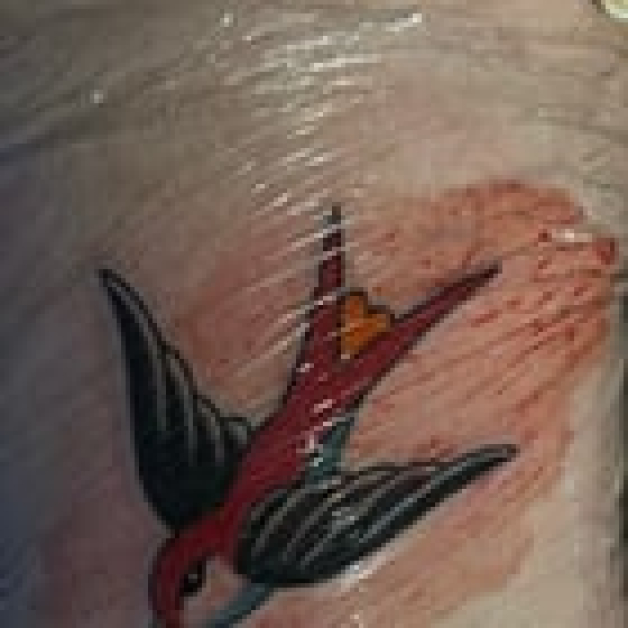


One in three Americans has a tattoo, according to PEW research. The growing popularity of getting inked has been unabated by the risks of skin infection or the chance of ending up with a badly drawn Bart Simpson on your leg for the rest of your life. But eye doctors in Australia have sounded the alarm about a rare but serious complication of tattoos that can cause permanent vision loss and can emerge years after getting a tattoo.
The study authors published an analysis of tattoo-associated uveitis from across Australia in the journal Clinical and Experimental Ophthalmology.
Uveitis is an immune-mediated condition in which the eye’s middle layer, the uvea, becomes inflamed. The condition causes pain, blurred vision, and redness, but can ultimately lead to vision loss if left untreated.
Read More: The Ancient Art of Tattooing
Immune Reactions to Tattoos
Tattoo ink is a complex blend of chemicals and can produce inflammation across the body, primarily in the skin.
In Australia, weaker regulation of these inks has led to some samples being found to contain toxic metals and cancer-causing chemicals, according to a 2026 study in the Journal of Hazardous Materials. The cases in the new report are thought to be caused by an immune reaction to ink chemicals, particularly those found in black ink.
The study authors noted that uveitis caused by tattoos has been poorly studied, and the new analysis is the most in-depth to date. It’s important to note that the study analyzed only 40 cases of the condition across decades of medical records. In many of the original records, the disease was misidentified when patients first presented to medical centers.
How the Ink May Impact Vision
In the new study, researchers had asked attendees at a meeting of the Royal Australian and New Zealand College of Ophthalmologists to submit any cases they had recorded of the condition.
Most of the patients documented were young. In 96 percent of patients, the uveitis had spread to both eyes. The first-line treatment for tattoo-associated uveitis is local steroid application, but in treatment-resistant cases, systemic immunosuppression may be needed.
Over the 40 cases recorded, just three had no vision loss. Thirty patients experienced temporary vision loss, and seven permanently lost vision due to structural changes caused by chronic inflammation, the authors wrote. Common complications of the condition include cataracts and glaucoma.
Knowing the Risks
It’s important to note that the risk of tattoo-associated uveitis remains very low. The authors estimated that when a non-tattooed person decides to get inked, the risk of developing uveitis was 12 to 15 cases per million people. They also acknowledge that the rush of getting a tattoo is so strong that not even serious complications like uveitis put everyone off.
“Whilst some patients in our study wish they had not been tattooed or are considering tattoo removal, others have continued to acquire more tattoos even while immunosuppressed,” the authors wrote in the study.
As tattoos continue to grow in popularity, the authors call for more awareness of these unusual complications.
This article is not offering medical advice and should be used for informational purposes only.
Read More: Tardigrade Tattoos Could Pave the Way for Microscopic Medical Devices
Article Sources
Our writers at Discovermagazine.com use peer-reviewed studies and high-quality sources for our articles, and our editors review for scientific accuracy and editorial standards. Review the sources used below for this article:
- This article references information from the recent study published in Clinical and Experimental Ophthalmology: Clinical and Experimental Ophthalmology
- This article references information from the recent study published in the Journal of Hazardous Materials:Toxic metals and carcinogens in tattoo inks available in Australia
- This article references information from PEW: 32% of Americans have a tattoo, including 22% who have more than one